Four Warriors, Four Crystals, and a World Veiled in Darkness…
A Foray into the Very First Final Fantasy
Part 1: First Things First…
I have a nasty habit of starting things from the very beginning.
This isn’t a simple reading of Book 1 before Book 2, nor is it an obsession with in-universe story, where we begin with the prequels and end with the sequels. This is much wilder, and frankly, insane — an obsession for development history and production, for seeing how things were made, how they grew over time, and how what came before informs the present. That is how I, who was born far after 1987 and has no real nostalgia for the 8-bit gaming (outside of that strange sense you get when sitting with something before your time), am playing the original Final Fantasy. Not the Pixel Remaster or its various remaster predecessors, but rather the original original, Final Fantasy for the Nintendo Famicom.
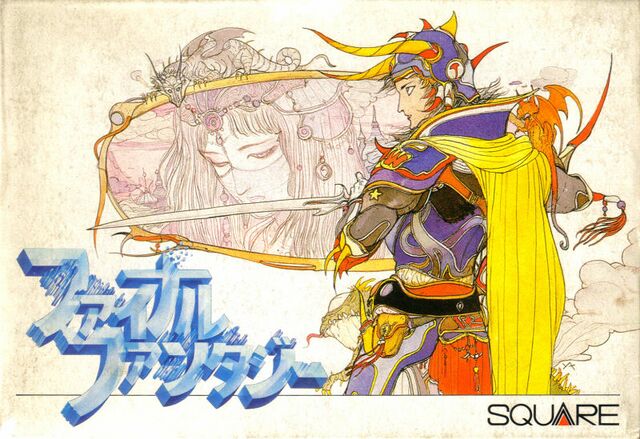
Am I worried? Honestly, not in the slightest. For one, I am well acquainted with Final Fantasy and its tropes, and I have already played several different versions of this very game, even recently completing a playthrough of the Famicom version with bugs patched.
My ridiculous obsession with experiencing the origins of a franchise has already led me to play through Digital Devil Story: Megami Tensei for the Famicom in its ludicrous entirety, creating a mind-boggling 13 graph-paper pages worth of maps (with each square being a tile in the game), as well as listing the MP costs and effects of each usable spell, crafting a home-made fusion chart, and writing by hand a comprehensive compendium detailing the stats of every demon you can summon (all of which I of course, well, summoned).
That was an experience akin to smacking your head against a wall on purpose, (and I’m sure I will write more about it for another article), but for now, it is beyond the point. Just know that, in comparison, Final Fantasy for the Famicom should be, hopefully, a piece of pixelated cake.
So why am I not playing the NES version? Well, Final Fantasy came out in Japan on the Famicom three years before it was released in the USA on the NES, and it contains a small number of admittedly inconsequential changes — essentially just a handful of sprite censoring plus the odd omission of any enemy encounters on the final floor of the final dungeon. There are several original releases in the Final Fantasy series that were only released in Japan, however, so I have decided to, for consistency’s sake, stick with the Japanese releases where possible. The only modification I have added is a fan translation of this version into English by Chaos Rush — I cannot understand Japanese, unfortunately. すみません.
Time for an Introduction
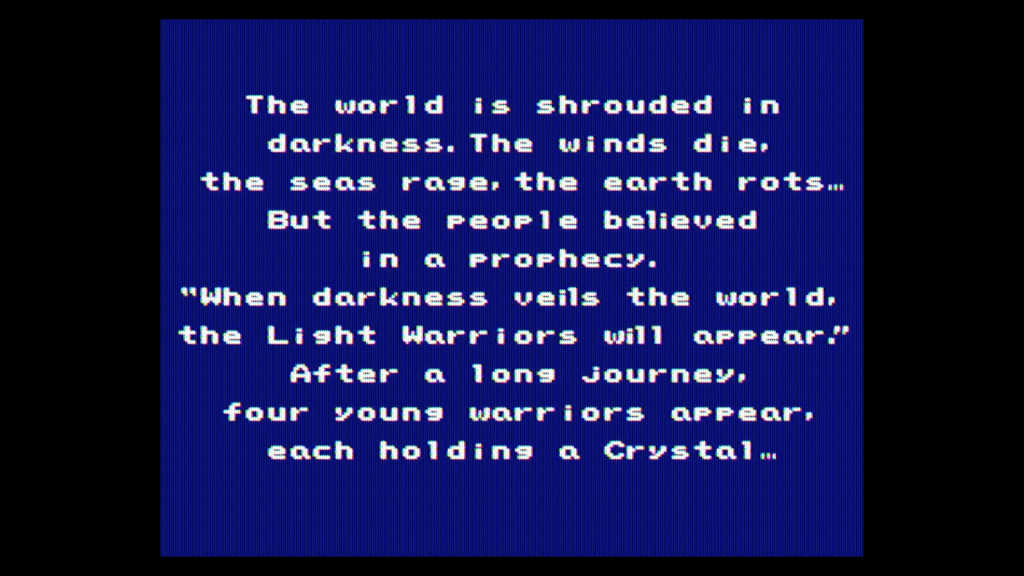
So, we begin, with no title screen or logo, but slowly-revealed white text on a blue background. I don’t mind this introduction. In fact, it’s a nice way to throw you straight into the story. I must admit though, I do wish there was some sort of title once you press a button to continue.
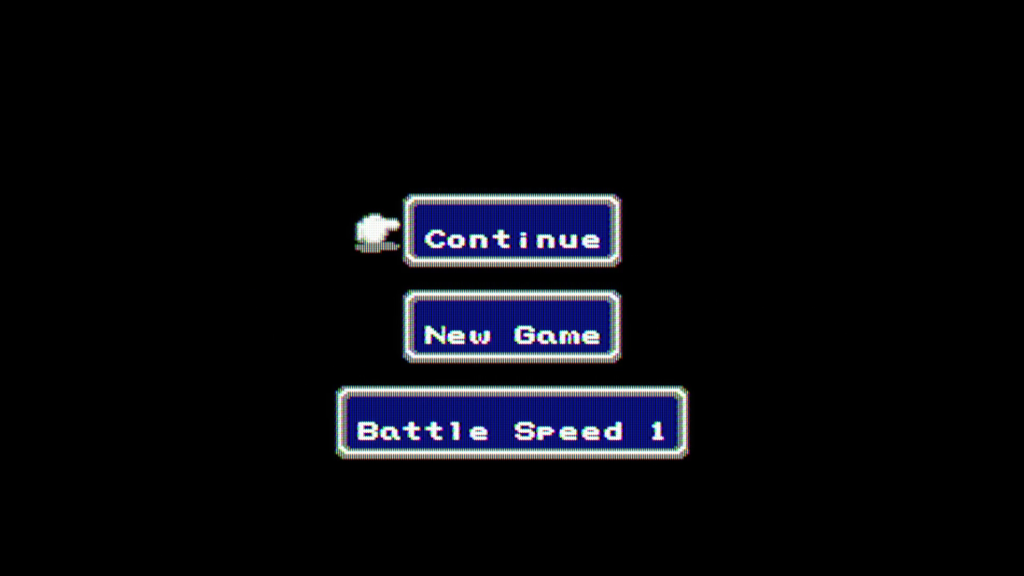
All you’re met with is a black void and three blue boxes prompting you for a “New Game,” “Continue,” or to set your “Battle Speed” (the last of which you’ll want to knock up a few notches if you can read faster than a turtle). I mean, the black void is just begging for the words Final Fantasy at the top.
Oh well. I guess darkness really does veil the world.
Upon selecting “Continue,” you’ll be met with four blue boxes filled with four plucky adventurers. It is now time for you to make the most important decision of the game, but don’t worry. Once you make your choice, there is no way to change your mind but to start a new game.
You Guys Having a Party?
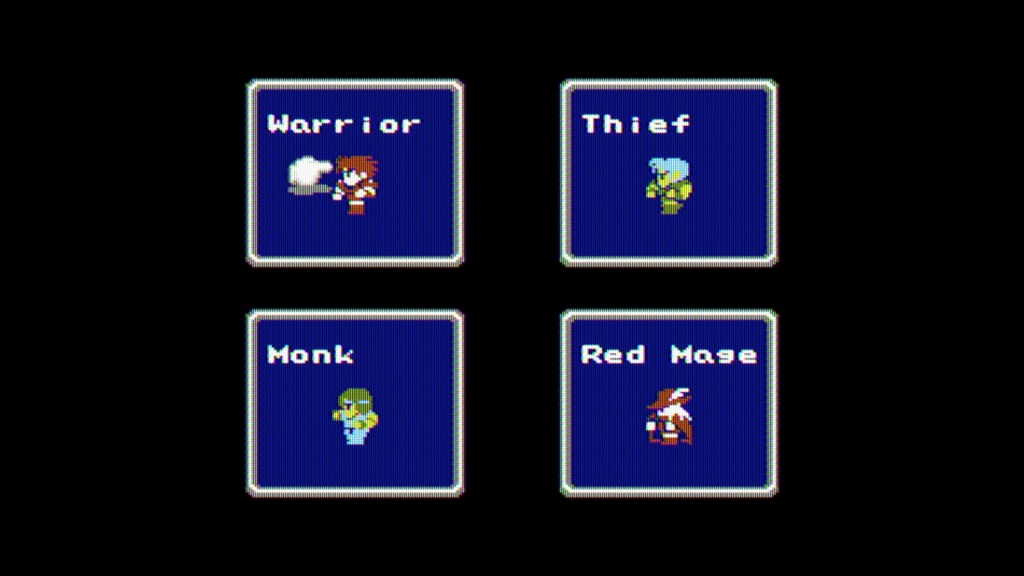
The main way Final Fantasy stands apart from the other JRPGs of its time is this party selection at the very beginning. It may not be much by modern standards — six potential characters to fill four party slots — but back then, it was a pretty big deal. The Japanese manual touts a whopping 1,296 combinations! But using the magic of ~MATH~, you’ll find that 1,170 of those 1,296 are repetitions of the same party but in different orders.
Although party order is important, it is changeable in game, so the manual is, in my opinion, being a bit overzealous with its claim, with the actual count of party possibilities being closer to 126 (which admittedly, is still a sizable amount). Now, if you wanted to have each party member be different, you would have a much lower but nevertheless respectable number of 15 possible combinations.
Potential Party Pals: Part 1
If this choice of party members is permanent and oh-so-important, let’s meet these Warrior-of-Light wannabes.
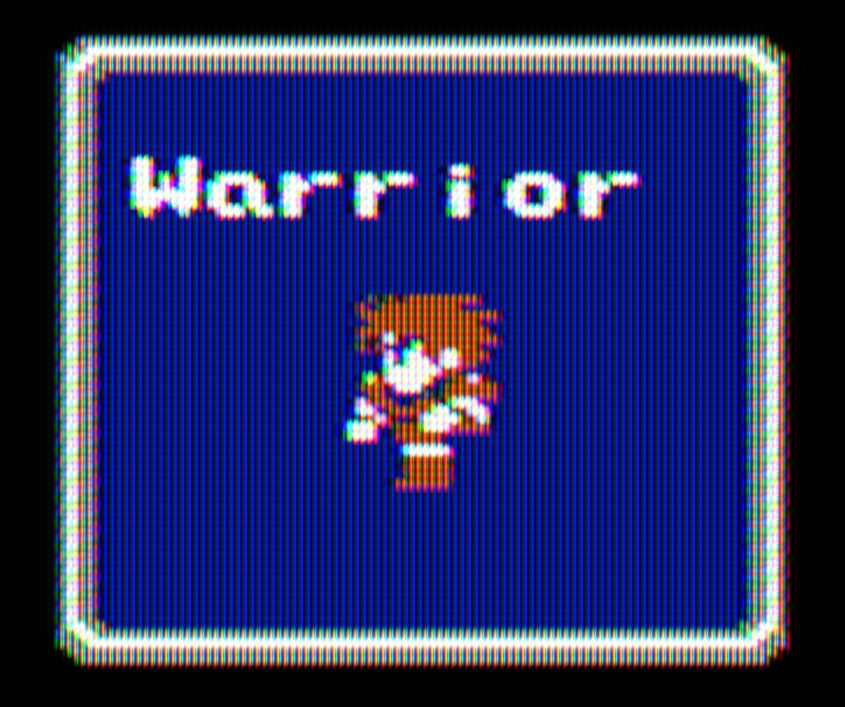
First up, aptly, is THE Warrior. He can hit well and, as suggested by his armor (which to me reminds me of goofy American-football shoulder pads), can get hit even harder and still stay standing. He’s the second best physical attacker, can use most of the equipment in the game, and the best “tank” of the bunch.
Frankly, there are no other real tank options to choose from with these six, which is one of my main gripes with this game (though it is hard to be too judgy of a game that was miraculously held together by duct tape and dreams). In this first Final Fantasy, the party member at the top of the lineup gets hit 50% of the time, with the second member getting hit 25% of the time, and the third and fourth, 12.5% each. It really pays to have a character who can take a beating in that top spot, and the only one who fits that bill is the Warrior, so welcome to the party for this playthrough, Mr. Spikeyhair McFootballpads.
The next up is the Thief, sporting some sky-blue locks and muddy leather boots. Despite his touted title, this little rascal steals absolutely zip this entire game, but he can zip away from enemies relatively well using the Run command (though this is marred a bit by game bugs).
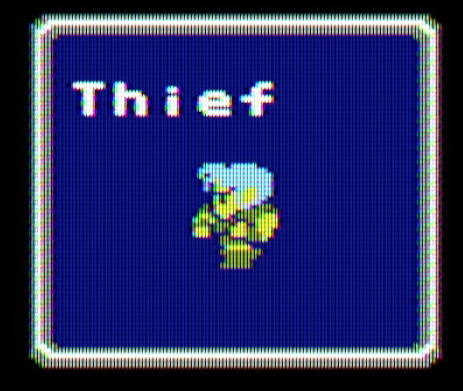
His main offensive claim to fame is a higher critical rate than his peers, which is also marred by bugs, so the Thief really got the short end of the skill stick in this game. So let’s not offer him to join our crew just yet.
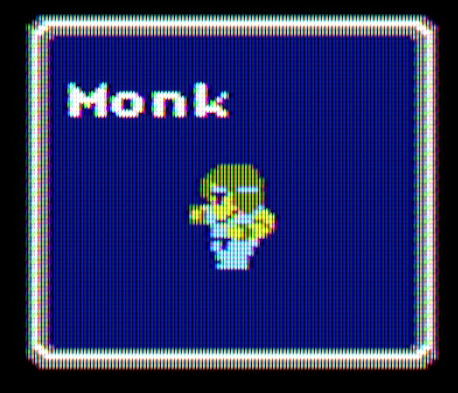
There’s also the Monk, a mullet-wearing martial artist who seems as keen on being peaceful as a punch flying into an enemy’s face. By the end of the game, he’s the best attacker around and gets a sizable amount of HP to help him stay alive. His main gimmick is how his stats increase when he is unarmed and unarmored, which humorously leads to a naked guy’s fists being the best way to beat the final boss, though his lack of armor for defense does make him a bit vulnerable.
This lack of armor usage does come with a perk, however. In the original Final Fantasy, you can only carry four weapons and four pieces of armor per character including those you’ve equipped. So, once your crew is decked out with helms, chest plates, bracers, and shields, you have a scant amount of slots available to pick up any armor pieces in chests. With the Monk, you basically get a +4 to your woefully-small inventory pouch. Overall, he’s a solid hitter, literally, but let’s meet the rest of the cast before we give him an invitation.
A Magical Aside
Before we introduce the second half of our party possibilities, let’s talk about the second half of combat in this game. Final Fantasy is not just a game of hitting things with swords, sticks, and fists; it is a game of hitting things with spells, swords, sticks, and fists.
The magic is split up into two types, white and black, where the white spells generally provide healing, cure status ailments, and support your team’s defense, and the black spells attack and debilitate your opponents and increase your squad’s offensive potential. The Famicom manual states that white magic is drawn from the “benevolent spirits that slumber within humans,” while black magic is born from the “four elements that make up the natural world” (thanks, Google Translate), and indeed, one of the best reasons to have a black-magic user is to utilize elemental spells that may be effective against an enemy’s weakness.
Yet magic, like several parts of this game, is a bit bugged. For starters, several spells straight up do not work at all or produce negative effects for your party. Plus, the Intelligence stat, which your mages should have a lot of, does absolutely nothing in the game. It was probably intended to increase magic efficacy or accuracy, but as for now, it’s just a cool looking number on your stat screen. This means that magic soon lags behind physical attacks as the game progresses, but there are a couple spells that are important to have in store.
Potential Party Pals: Part 2
So, let’s meet the different mages:
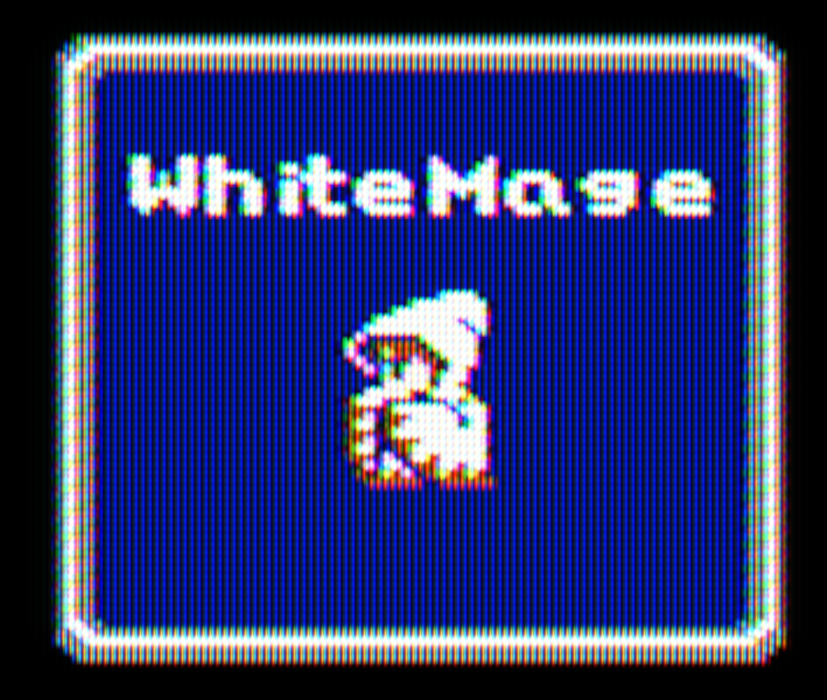
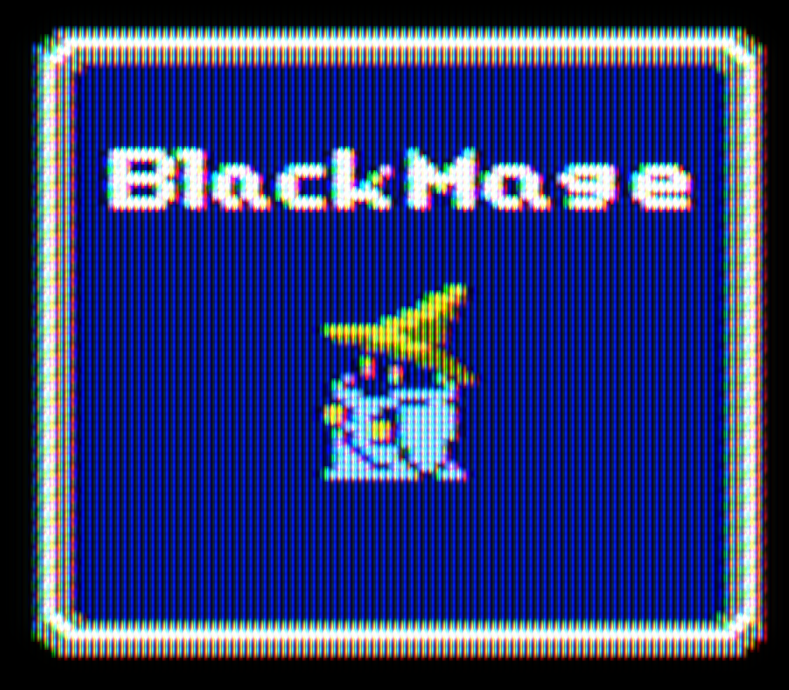
The White Mage, you guessed it, masters white magic, while the Black Mage, believe it or not, uses black magic. The Red Mage can use both white and black magic, but is locked out of some spells, namely the “Dia,” full-party heal, and instant-KO-type spells, as well as the top-level spells of each magic type. He also has lower Intelligence than his magical peers (but remember, this stat is useless).
The Red Mage can serve as an alright fighter and defender, getting access to some decent armor and weapons — so that’s another feather in his red cap. In short, he’s a jack of all trades, master of none, a quality support class, and, since Intelligence is useless in this game, a decent mage.
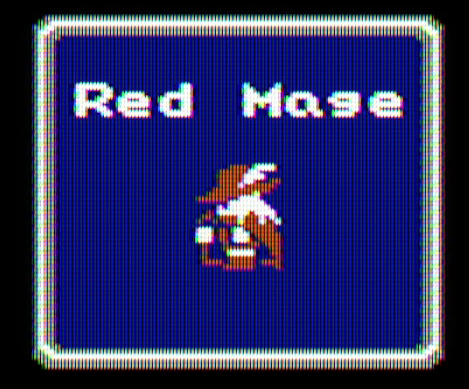
He probably also has the best drip of the crew (though the Black Mage with his oversized, pointed wide-brim could give him a run for his money).
Finalizing the Crew
We’re going to recruit the White Mage and the Black Mage, because there are some unique-to-them spells I would like access to, and I generally like to specialize my characters into particular roles. That leaves one spot left in our party of four.
While it pains me to leave behind the character with the cool cape, the Red Mage is a bit expensive for our current lineup. Having to buy quality gear for the Red Mage and the Warrior, plus spells for the Red, White, and Black Mages can add up very quickly, and lead to a situation where your party is under-equipped unless you grind, which I generally prefer not to do. So, so long, you dapper do-it-all! Maybe next time.
That leaves the Thief and the Monk, and while the Monk is probably the smartest choice, he’s also, in my opinion, the most boring. Once he reaches Level 9, your best strategy is to simply leave him naked, alone, and punching each turn.
Despite common sense, let’s welcome the little Thief to the team. Sure, he’s rather useless, but every squad needs a personality hire, and he may have a couple tricks up his sleeve when we reach a certain special event halfway through the game (hint, hint).
What’s in a Name?
But we’re not done yet. These warriors need names, and I, in my usual unnecessarily-detailed manner, want these names to fit both the story and each character’s role. We are unfortunately limited to only a measly four letters per name, so we have to get creative.
I decided to go with an “elements of nature” theme, since, as we’ll soon discover, the “four elements” play a large role in this story. So, let me now introduce…
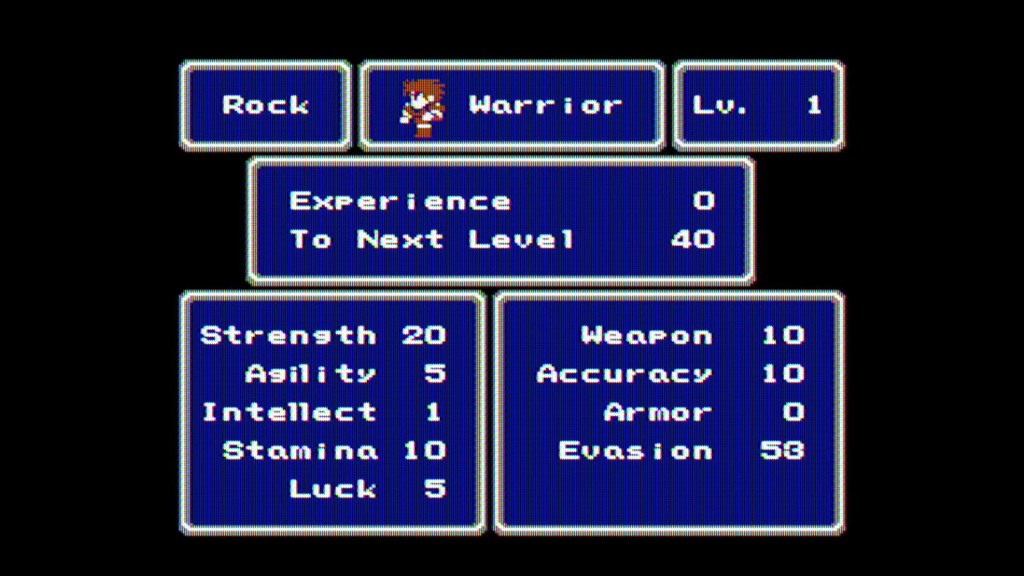
Rock, the Warrior, who carries the Earth Crystal, and, we shall soon see, will often carry the team, serving as their “rock” through brutal dungeon after brutal dungeon. Punching him is like punching a rock, and getting hit by him like getting hit by a rock. Hopefully, by the time we are done, he’ll be as strong as Dwayne, the Rock.
Next, there is…
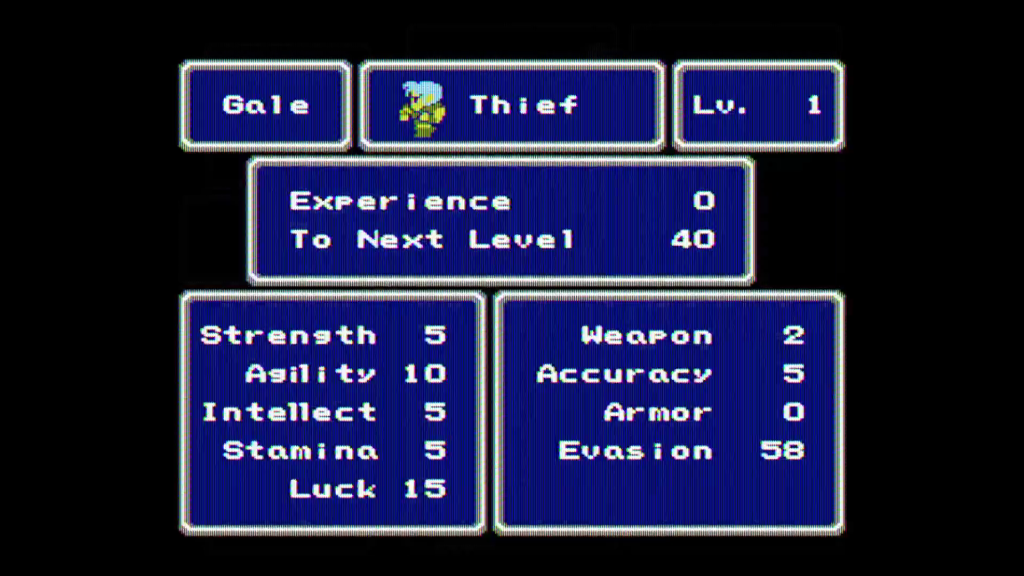
Gale, the Thief, who has snatched up the Wind Crystal and shall help us run like the wind if we ever get in trouble. With him in the second spot, we’ll have our fingers crossed that he uses his high evasion to evade a hit every now and then. And who knows, maybe one day he’ll even hit his foes with the force of a gale.
He’s followed by…
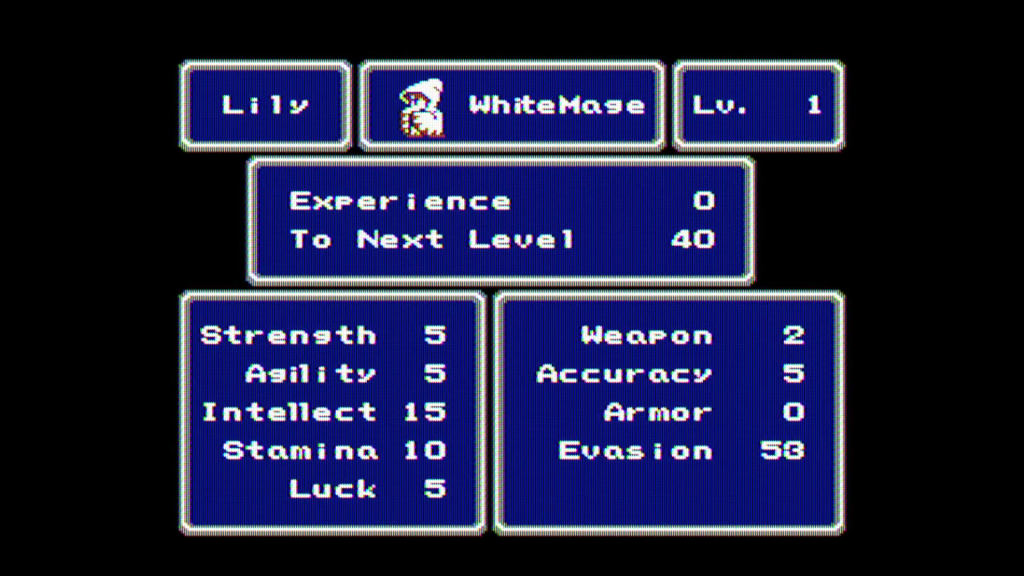
Lily, the White Mage, who defends the Water Crystal and will help defend our party with her spells and let us drink from the metaphorical water of life whenever our health runs low. Fun fact: water lilies were a sign of cleanliness in ancient Mayan culture, as their accompanying lily pads would block sunlight from entering water, and therefore prevent algae buildup in reservoirs. So hopeful Lily can keep us clean from all the nasty status ailments prevalent in this game.
Finally, we have…
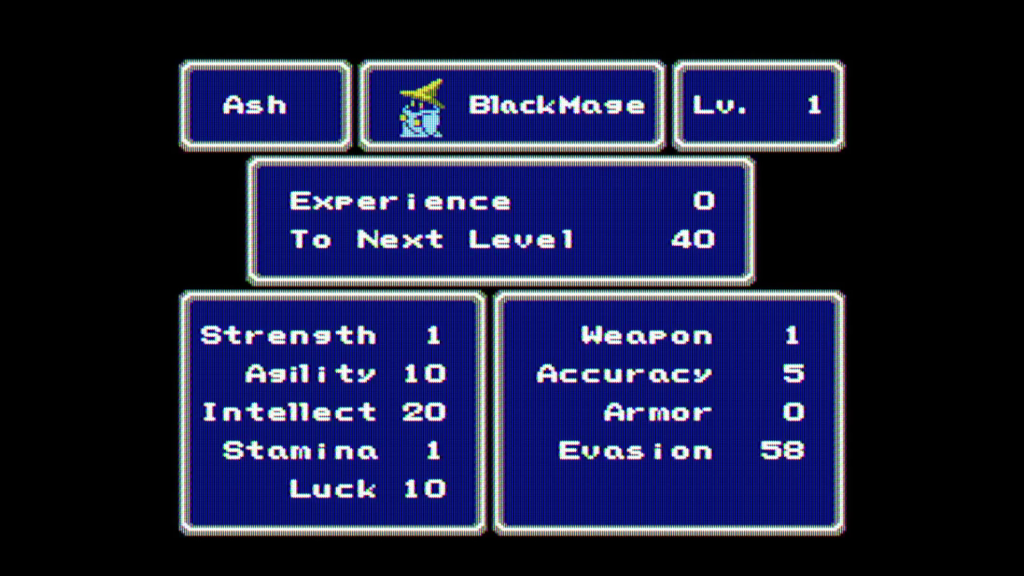
Ash, the Black Mage, whose Fire Crystal is burning a literal hole in his pocket. Let’s hope he burns more than a few holes in a few foes on our quest to bring light to the world. He’s not as sturdy as an ash tree, but he can make enemies into ashes pretty quickly. And man, doesn’t that blue robe of his look cozy?
That’s our squad. Our crew. Our Warriors of Light.
An Abrupt Arrival
Once you confirm your characters’ classes and names, you’re plopped down right into the game world. But besides that white text on a blue screen when you turn the console on, there’s no explanation for who or where you are.
The manual doesn’t provide much more info. According to it, the “four warriors bearing crystals” must:
- Meet each other (Check! ✓)
- Appear in Cornelia
- Unravel numerous secrets
- Defeat the monsters standing in their way
- Find the crystal altars (0/4)
- Restore light to the crystals (0/4)
- Do NOT succumb to the rule of monsters
That’s quite a comprehensive list, and while Google may have mistranslated a phrase here or there, it seems like an appropriate itinerary for any supposed “Warriors of Light.”
The game never quite tells us how the warriors got their crystals, where they came from, or what their favorite breakfast foods are. These characters are blank templates for you to place whatever backstory you’d like upon. So for me, these warriors simply crashed like meteors out of outer space, carrying their colored rocks, and knowing nothing at all but the fact they all love a classic chocobo-egg breakfast (I know chocobos are not technically in this game, but that’s my head-canon insert).
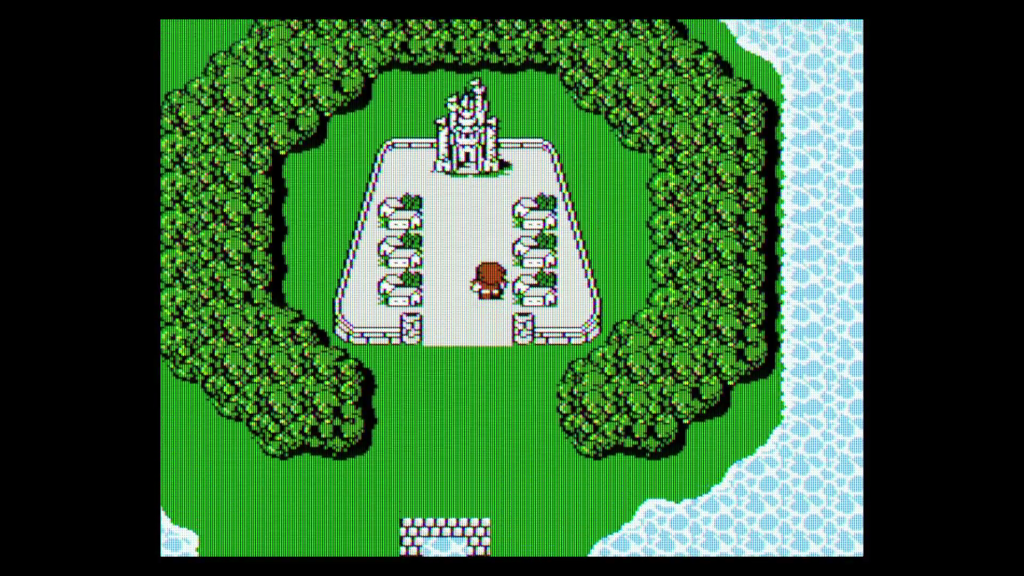
Looking at our checklist, I see we have to visit a certain Cornelia. Perhaps it’s this city north of us? It’s time now for our motley crew to mosey on over to the town and castle to see who or what needs saving in this crazy world.

